I’m building the experience layer of Diligent One Agentic Fabric from the ground up, defining how people interact with agents across products, workflows, and surfaces.
At Diligent, I lead experience design for Platform AI and Core Services, helping shape the interaction foundation for an emerging agentic platform within a global GRC ecosystem serving 75% of the Fortune 500. My work spans foundational platform experiences, agent interaction patterns, human-in-the-loop workflows, and cross-surface experiences designed to scale as the platform expands with new agents and capabilities.
Diligent One brings governance, risk, audit, and compliance capabilities together within a connected enterprise platform. As that ecosystem evolves toward more AI-enabled ways of working, Platform AI is extending the experience beyond individual applications — creating a shared layer where users can access intelligence, initiate work, and respond to relevant actions across their broader GRC environment.
Lead Product Designer for Platform AI and Core Services, shaping the experience strategy and interaction architecture for Diligent’s emerging agentic platform. I work across product, platform engineering, AI architecture, and front-end development, often driving discovery and design direction independently in highly ambiguous, zero-to-one problem spaces.
Agentic experience vision and interaction architecture
Platform AI home experience
Proactive work orchestration
Cross-surface / headless agent experiences
Human-in-the-loop interaction patterns
Create enough structure for teams to build consistently without prematurely constraining a platform that is evolving
Create a consistent, context-aware, and scalable agentic operating model for GRC. One platform standard, many domain agents, and one coherent experience.
Building the platform one layer at a time.
Rather than designing the Agentic Fabric as a finished product, I’ve been helping establish it progressively: defining foundational interaction patterns first, then adding increasingly proactive, contextual, and agentic capabilities as the platform matures.
A layered agentic experience foundation that establishes shared interaction patterns, proactive work surfaces, human-in-the-loop controls, and portable agent behaviors across the Diligent ecosystem.
Experience foundation
Platform scalability
Engineering alignment
Delivery readiness
Attention Pane
Building the proactive layer.
The platform could answer questions. It couldn’t yet tell users what needed their attention.
01/ The challenge
Platform AI began as a reactive Q&A experience. The next step was to make it proactive: surface the work that matters across Diligent products and help each user understand what requires attention, why, and what to do next.
The product brief established the opportunity, but much of the experience model was still undefined. I led the design of Attention Pane V1, translating that direction into the interaction architecture, rules, states, and build-ready experience needed to make it real.
02/ Design intent
Designing a focused, actionable layer between intelligence and work. I wasn't just designing responsive versions of the same UI. I was thinking about the underlying interaction contract.
- Surface what matters
- Make every item understandable
- Keep users in control
- Design beyond the screen
03/ System & interaction architecture
Turning a product concept into an interaction system.
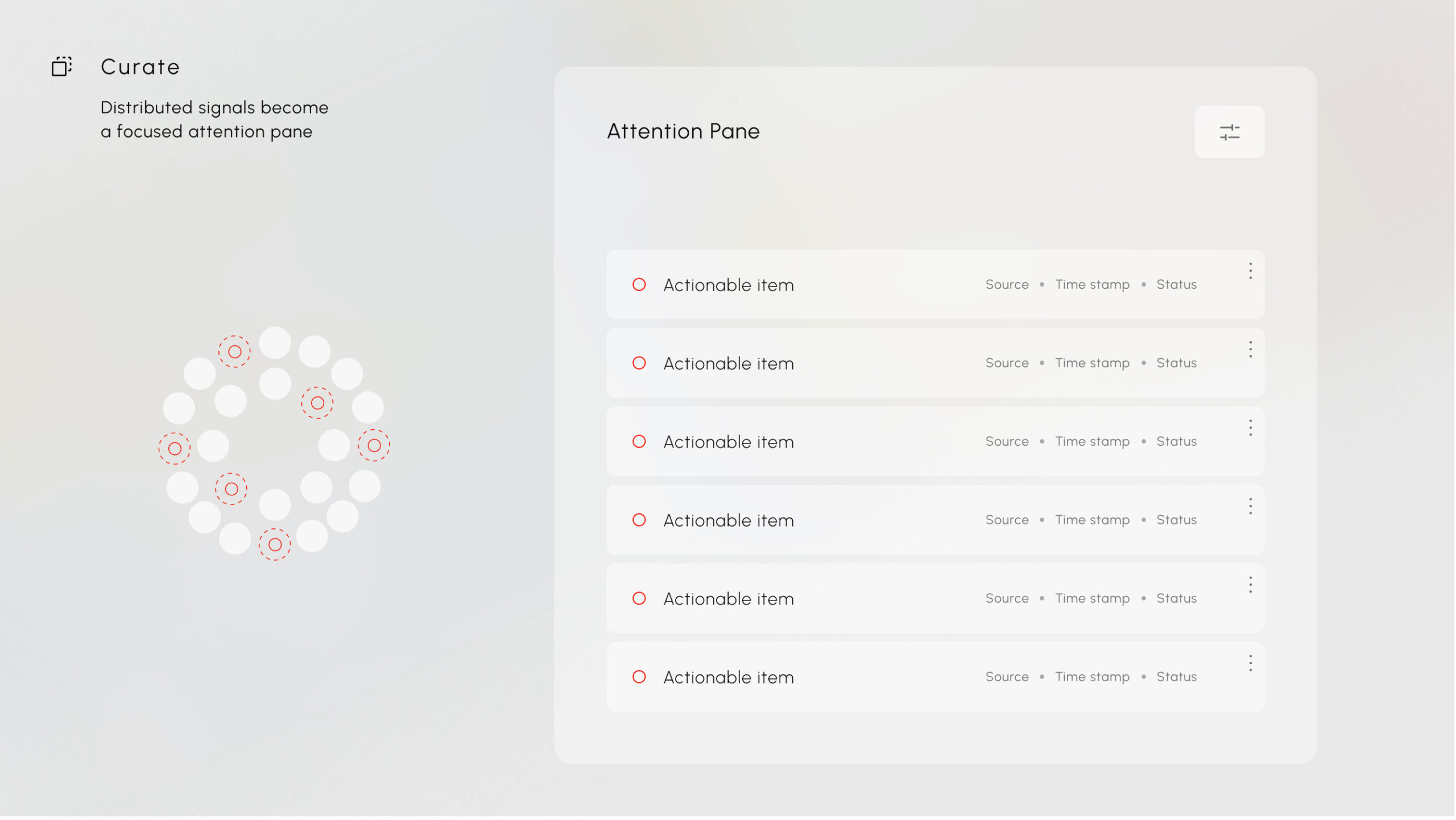
I translated the Attention Pane concept into a coherent interaction system: defining how actionable items are curated and structured, how users move from awareness to action, how items behave across their lifecycle, and where human control is required in agent-driven workflows. The result was a persistent work surface designed around context, action, state, and user control.
04/ Headless vision
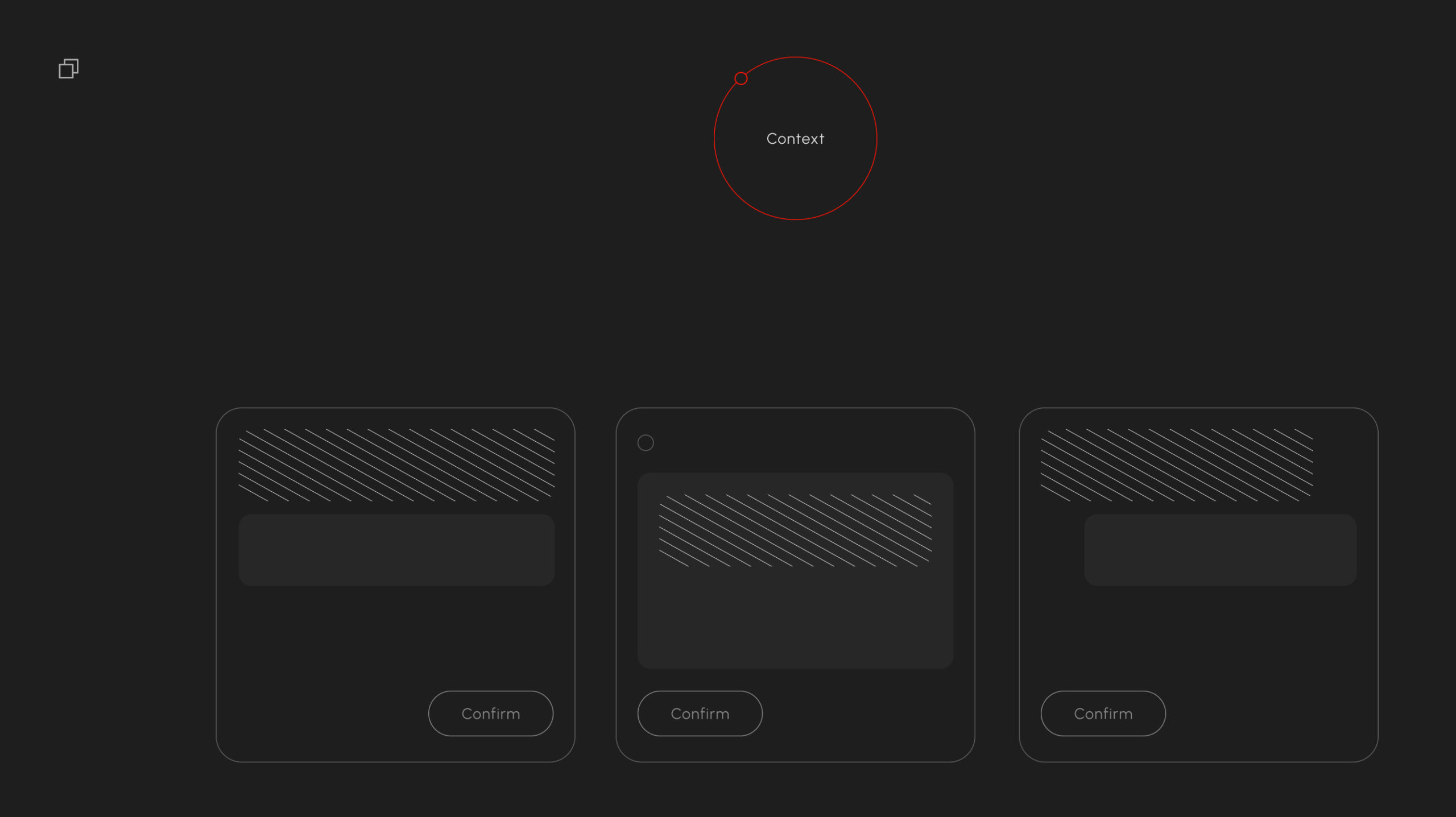
One interaction contract.
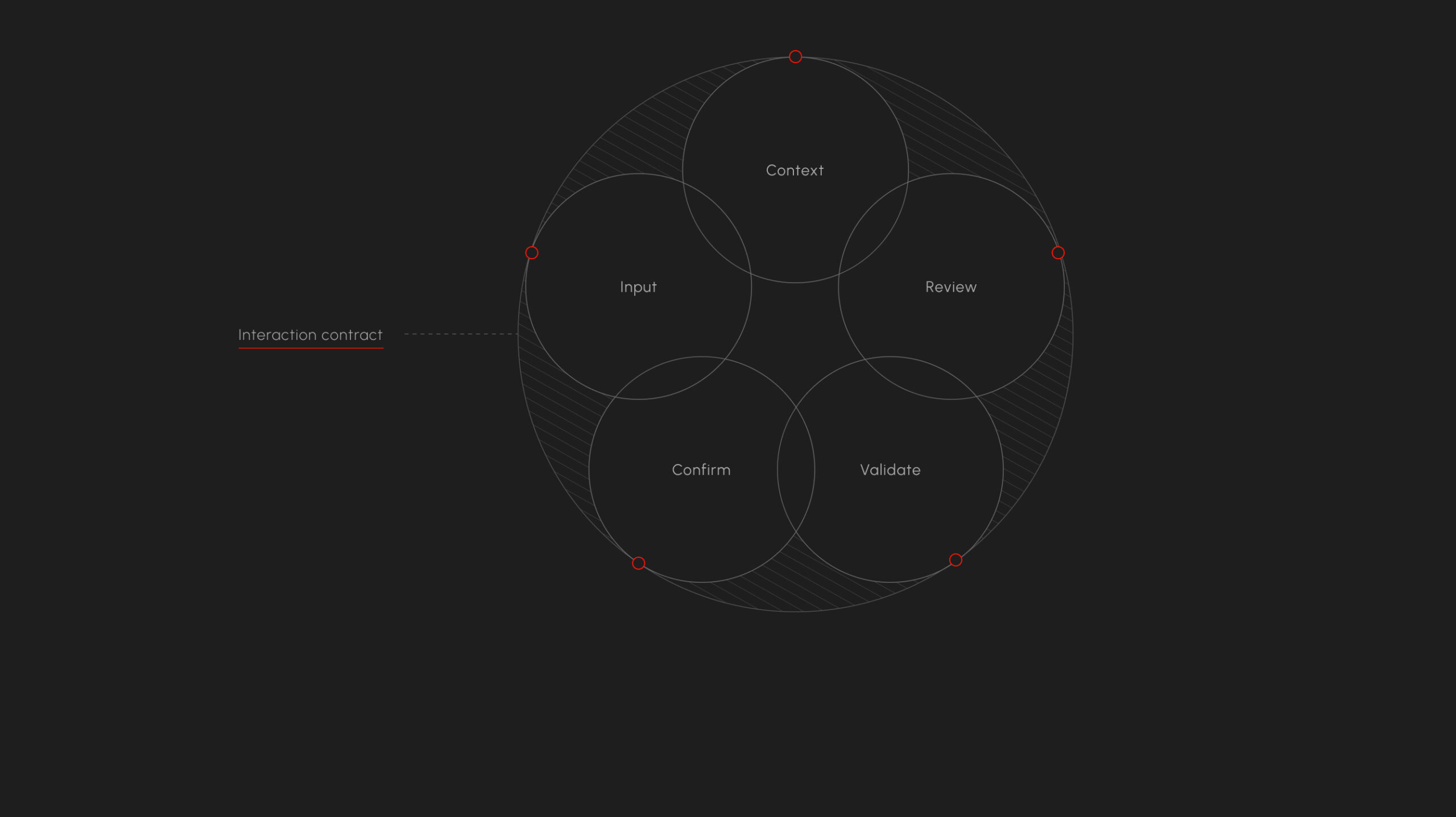
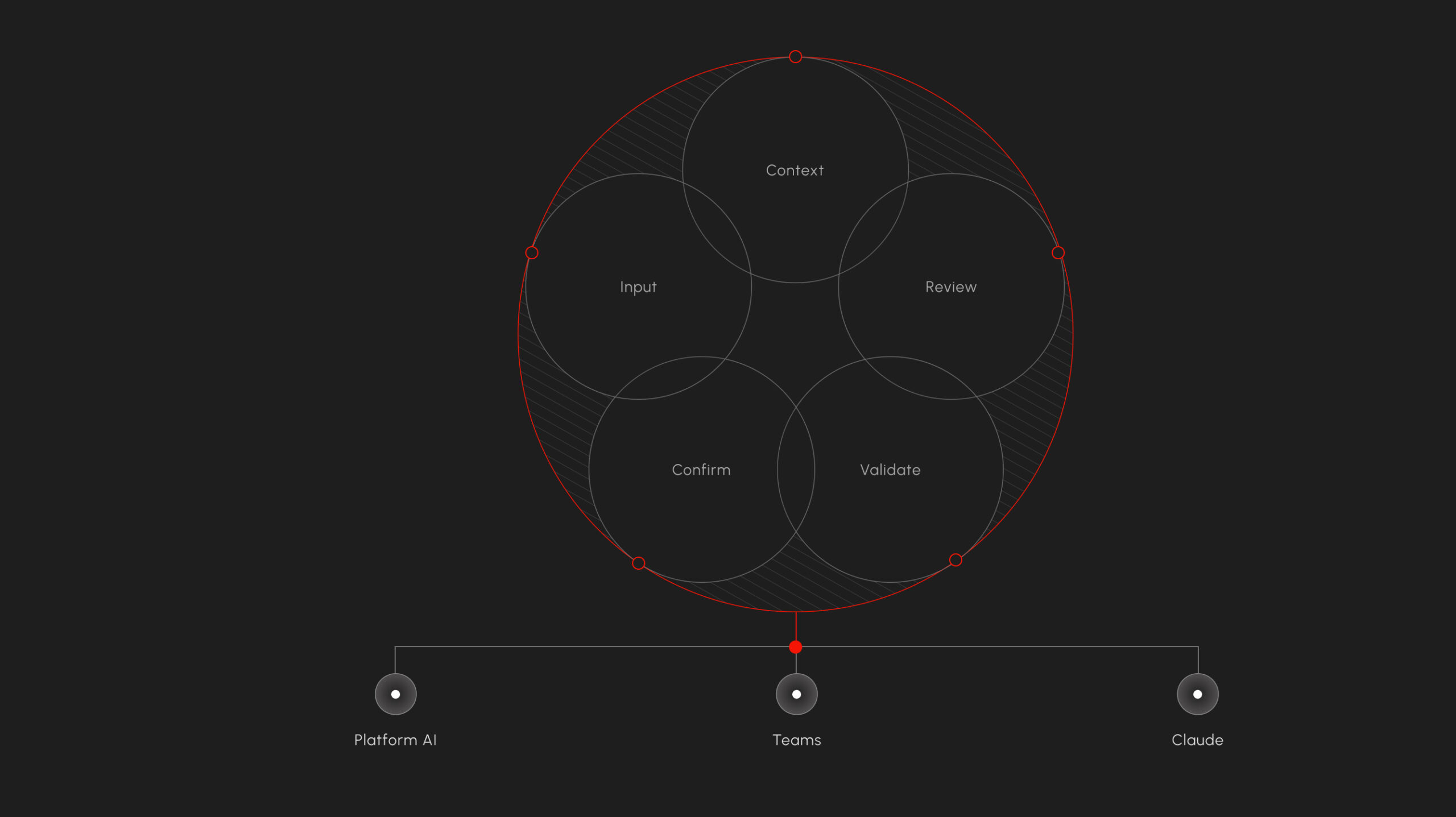
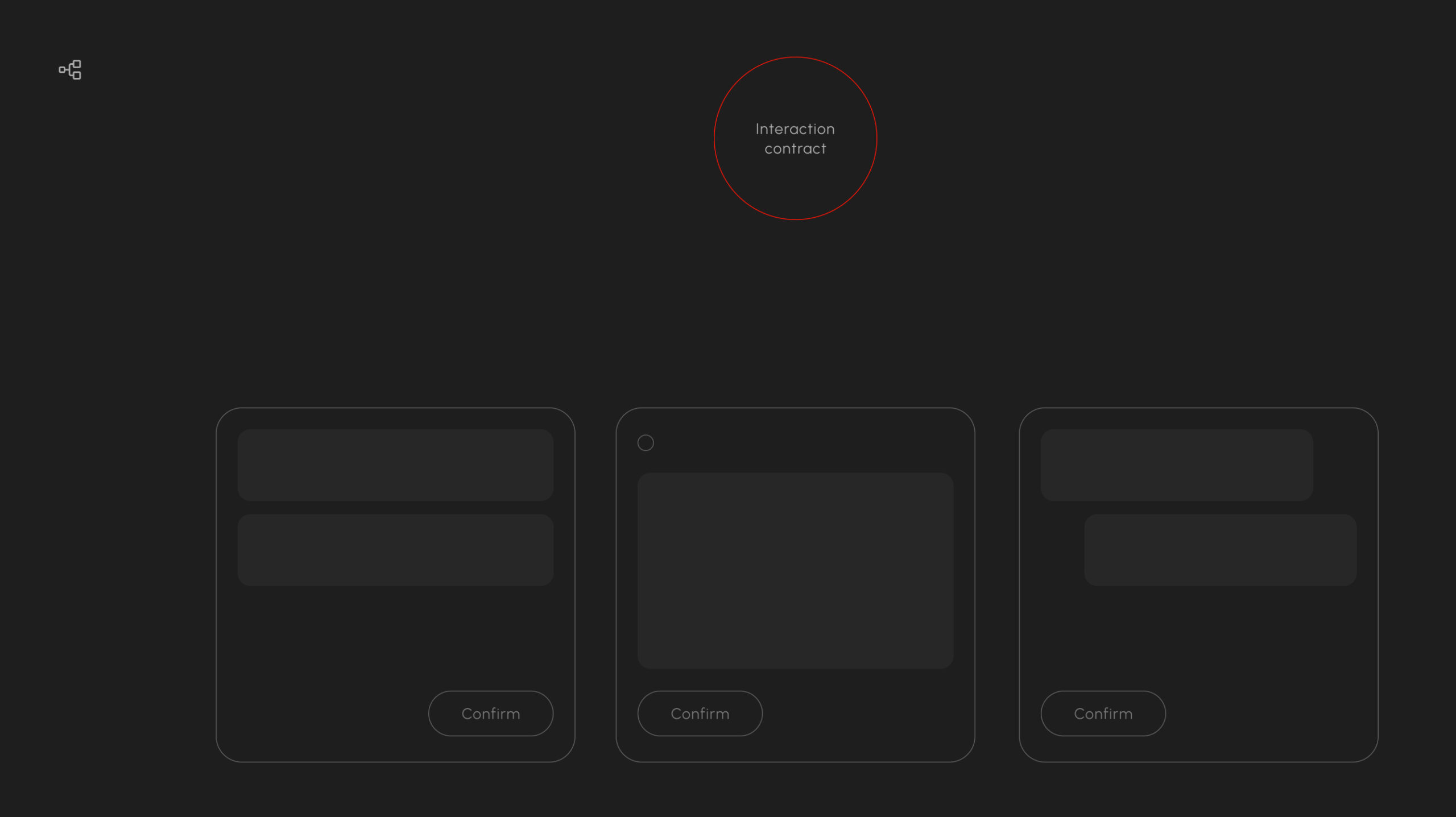
Multiple surfaces. I extended the V1 thinking beyond the homepage to explore how the same agent decision could travel across surfaces. Rather than designing separate interaction models for every host, I defined a shared decision payload — context, required input, preview, validation, and human confirmation — that could be rendered natively by Platform AI, collaboration tools, or external AI environments.
The interface changes. The interaction contract stays consistent.
05/ From discovery into build
I drove the Attention Pane from a high-level product concept to a build-ready interaction system, aligning UX and technical architecture throughout discovery and into implementation.
- Turned a high-level PRD into a build-ready interaction system
- Co-evolved UX and technical architecture with Platform Engineering
- Drove discovery and alignment through a critical gap in PM support
- Established an early model for proactive, agent-driven work in Platform AI
Daily Briefing Agent
The first version of the Attention Pane established a shared view of what needs a user’s attention across the GRC ecosystem. The next challenge was personalization: different roles, responsibilities, and risk priorities require different signals, levels of detail, and delivery patterns.
01/ Designing the personalization layer (combine with intro)
As the Attention Pane evolved from a shared cross-domain view into a more personalized experience, I began designing the Briefing Agent: a configurable layer that learns what matters to each user and shapes what information is surfaced, how much context they receive, and how the briefing reaches them.

01/ The challenge
From requirements to experience model.
The product requirements defined the core configuration capabilities, but left critical interaction questions unresolved. I decomposed the model, mapped system states and edge cases, and translated the requirements into a coherent configuration experience.
02/ The experience model
One configuration surface, multiple dimensions of personalization.
Sources / domains
Natural-language instructions
Brief / Standard / Detailed
In-app / Scheduled delivery via email
03/ Change title: Designing for agent behaviour
Unlike traditional settings, these controls configure future agent behavior. That required designing not only the happy path, but also how users understand delayed effects, changing permissions, unavailable signals, paused states, and recovery.
Sources and entitlements may change after configuration.
Changes affect future briefings, requiring clear feedback about when they take effect.
Users may configure the agent before enough signals exist to generate a meaningful briefing.
Save failures, unavailable delivery channels, and stale configuration require explicit recovery states.
Designing for Agents
Building human control and reusable interaction patterns into Platform AI.
As agents move from answering questions to taking action, the design problem shifts from conversation to control.
I worked across Platform AI, Product, Engineering, and Design to define how human judgment enters agentic workflows, how those interactions scale beyond individual features, and how AI-specific behaviors can become reusable platform patterns rather than one-off solutions.

01/ From actions to an interaction contract
Defining the first human intervention patterns.
I partnered with the Agentic Fabric engineering team to define the first reusable human-intervention patterns for agent workflows. I translated the interaction model into states and rules, then validated the contract with engineering so UX aligned with how workflows actually pause, resume, and proceed.
Allow the agent to continue with the proposed action.
Give the user a clear way to modify the agent’s proposal before execution.
Stop the proposed path while preserving context for what happens next.
Let the user provide information the agent needs to continue the workflow.
02/ From UI pattern to HITL system
Scaling human oversight with agent autonomy.
The larger question wasn’t how to design an approval button. It was when a human should be in the loop at all.
I expanded the implementation work into a broader HITL discovery to help Product frame how human oversight should evolve as agent autonomy increases. The direction explored calibrated autonomy: human intervention changes based on consequence, reversibility, uncertainty, and task context rather than applying the same approval model everywhere.
03/ Designing HITL as a platform capability
Human-in-the-Loop is a system, not a modal.
My research reframed HITL as a platform capability that spans more than interaction design. Human oversight only works when governance, orchestration, interface behavior, evidence, and learning operate together.
Define who can decide, approve, or intervene.
Define where agent workflows pause, route, resume, or escalate.
Give people enough context and control to make meaningful decisions.
Preserve what happened, who intervened, and what decision was made.
Turn structured human feedback into signals that can improve future behavior.
04/ From HITL patterns to A2UI
Making agent interactions reusable.
Once agent behaviors repeat across products, the next challenge is making them reusable without creating a parallel AI design system.
I helped frame A2UI as a behavior and workflow layer built on top of Diligent’s existing design system. The goal was to standardize AI-specific states and interactions while preserving shared foundations, accessibility, and visual consistency across products.
AI-specific behavior can be new. AI-specific styling should be new only when necessary.
05/ From components to operating model
Building the system across teams.
I worked across implementation, discovery, and platform strategy at the same time, connecting immediate engineering needs with a longer-term interaction model that could scale across Diligent.
Defined interaction contracts and reusable HITL behaviors with the team building agent workflows now.
Explored how human oversight, autonomy, and interaction patterns should evolve beyond the immediate implementation.
Worked across Product, Engineering, Design Systems, and business-unit designers to align priorities and shape reusable A2UI patterns that could serve multiple products.
06/ A2UI delivery
From concept to shared component behavior.
The first A2UI work focused on data-visualization patterns, with HITL interactions forming a subsequent layer. I collaborated with Product, Engineering, Design Systems, and designers across business units to understand downstream needs and feed those priorities into the shared component direction.
Designing the interaction layer between people and agents.
The work moved from individual controls to a reusable model for how people supervise, redirect, and collaborate with agents.
Across HITL and A2UI, my role was to connect interaction design, agent behavior, engineering constraints, and platform governance into a system that could support both immediate delivery and longer-term scale.